Service Design Project, Marvin Delivery Experience
Marvin Delivery Experience has been a persistent source of frustration for Marvin dealers for many years. Across qualitative interviews, quantitative surveys, and insights from strategic partners, the same theme continued to surface: dealers lack confidence in how Marvin communicates delivery information.
This project was a research and strategy engagement focused on understanding the current delivery experience, defining a clear future vision, and identifying practical opportunities for improvement. Rather than redesigning a single tool, the goal was to inform enterprise‑level transformation by grounding it in dealer needs, behavioral insights, and feasibility.
The Challenge
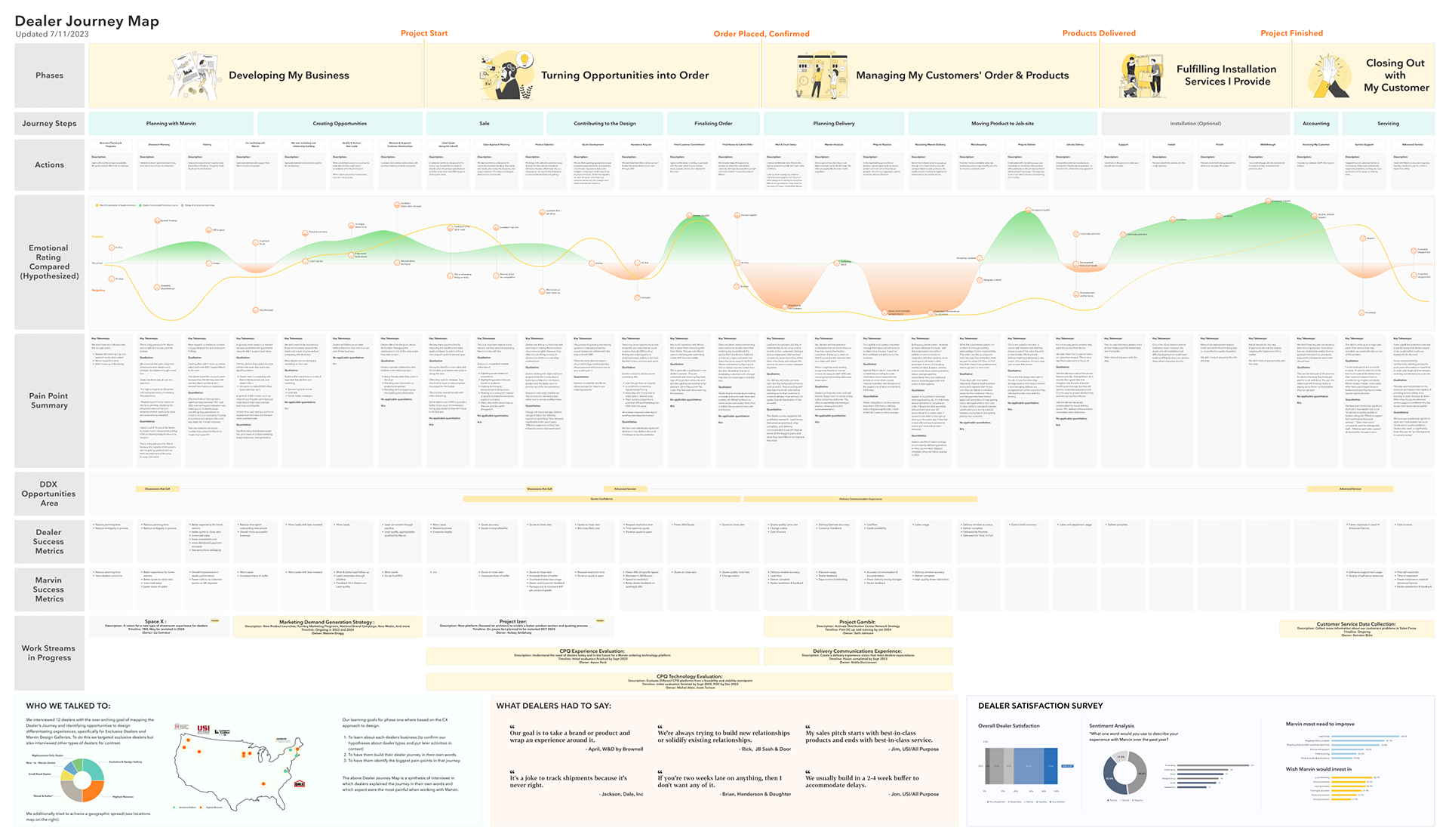
Feedback about delivery communication emerged repeatedly across multiple channels. Dealer research interviews during the Dealer journey mapping project, and prior delivery initiatives, surfaced clear pain points. Quantitative data from the Annual Dealer Engagement Survey further reinforced delivery as one of the most consistent drivers of dissatisfaction.
Dealers told us that delivery communication felt disjointed, noisy, and difficult to work with. Messages were often inaccurate or incomplete, which reduced their perceived value. Over time, this breakdown in communication eroded trust—dealers no longer felt confident relying on Marvin’s delivery estimates.
The downstream impact on behavior was significant. Dealers stopped engaging with the tools and notifications provided, added buffer time to lead dates to protect themselves, and increasingly contacted customer service or logistics teams for reassurance. Many developed workarounds, such as splitting orders by collection, simply to make deliveries easier to manage. What should have been a predictable experience became a constant source of uncertainty.
My Role
As co‑lead of the project, I shaped both the strategy and execution of the research and service design effort. I co‑created the project plan and research goals, ensuring alignment across experience teams, operations, and enterprise transformation leaders. I designed a research approach centered on tangible stimuli—such as journey concepts and sacrificial ideas—to help dealers react to concrete scenarios rather than abstract questions.
Throughout the engagement, I facilitated cross‑functional workshops with SMEs, designers, and business leaders to synthesize insights, validate assumptions, and co‑define the future vision. I partnered closely with Logistics, IT and enterprise platform transformation to assess feasibility and differentiate short‑term improvements from longer‑term platform opportunities.
Additionally, I coached teams in service blueprinting and journey mapping, helping them understand the end‑to‑end system, identify root causes, and visualize the future-state experience.
Research Approach
To deeply understand the problem space, we conducted mixed‑method research across internal and external audiences.
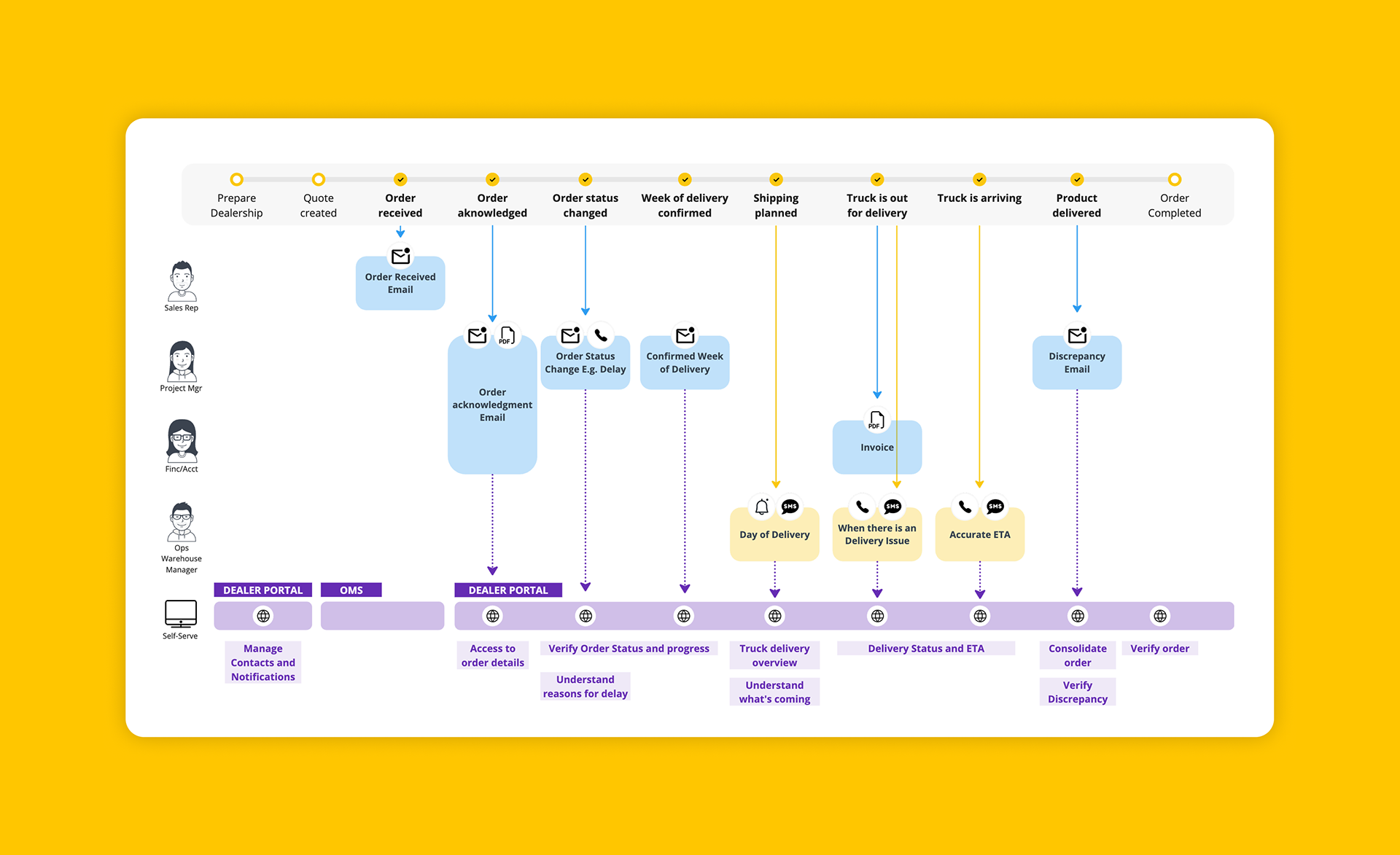
We interviewed 15 internal stakeholders across Sales Marketing Systems (SMS) to gain a systems‑level understanding of how delivery communication is generated and maintained. This work allowed us to map the current‑state service blueprint and identify structural and process gaps contributing to poor communication.
Externally, we spoke with seven dealer contacts across two rounds of interviews, representing roles in accounting, sales, project management, and delivery. These conversations helped us understand how delivery communication impacts real workflows, priorities, and customer relationships. We reviewed current communication tools, explored sacrificial concepts, and validated future‑state ideas and ideal journeys directly with dealers.
Hearing these experiences firsthand made the emotional impact of delivery issues clear—and reinforced the urgency for change.
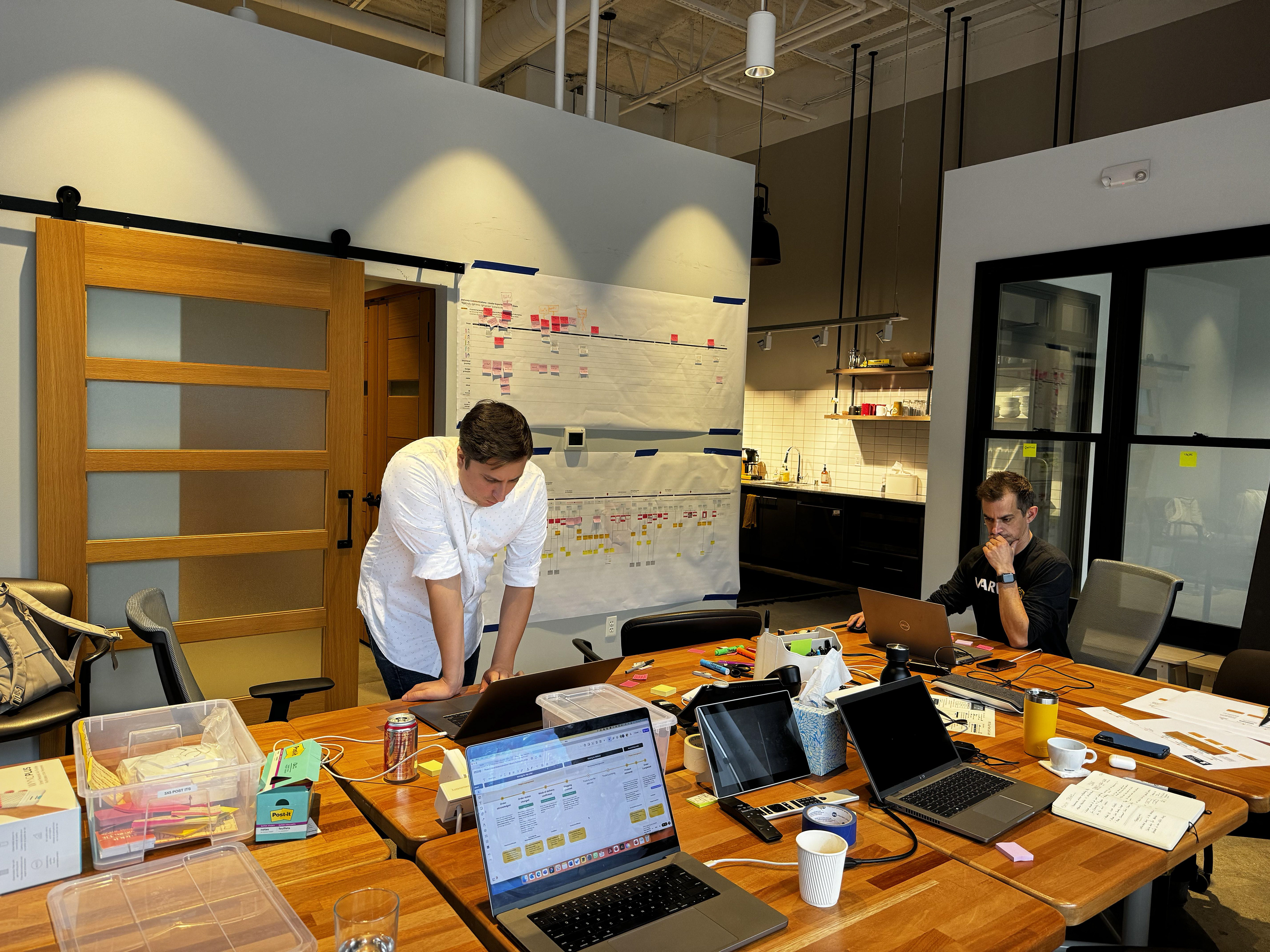
Research Synthesis and Journey Mapping
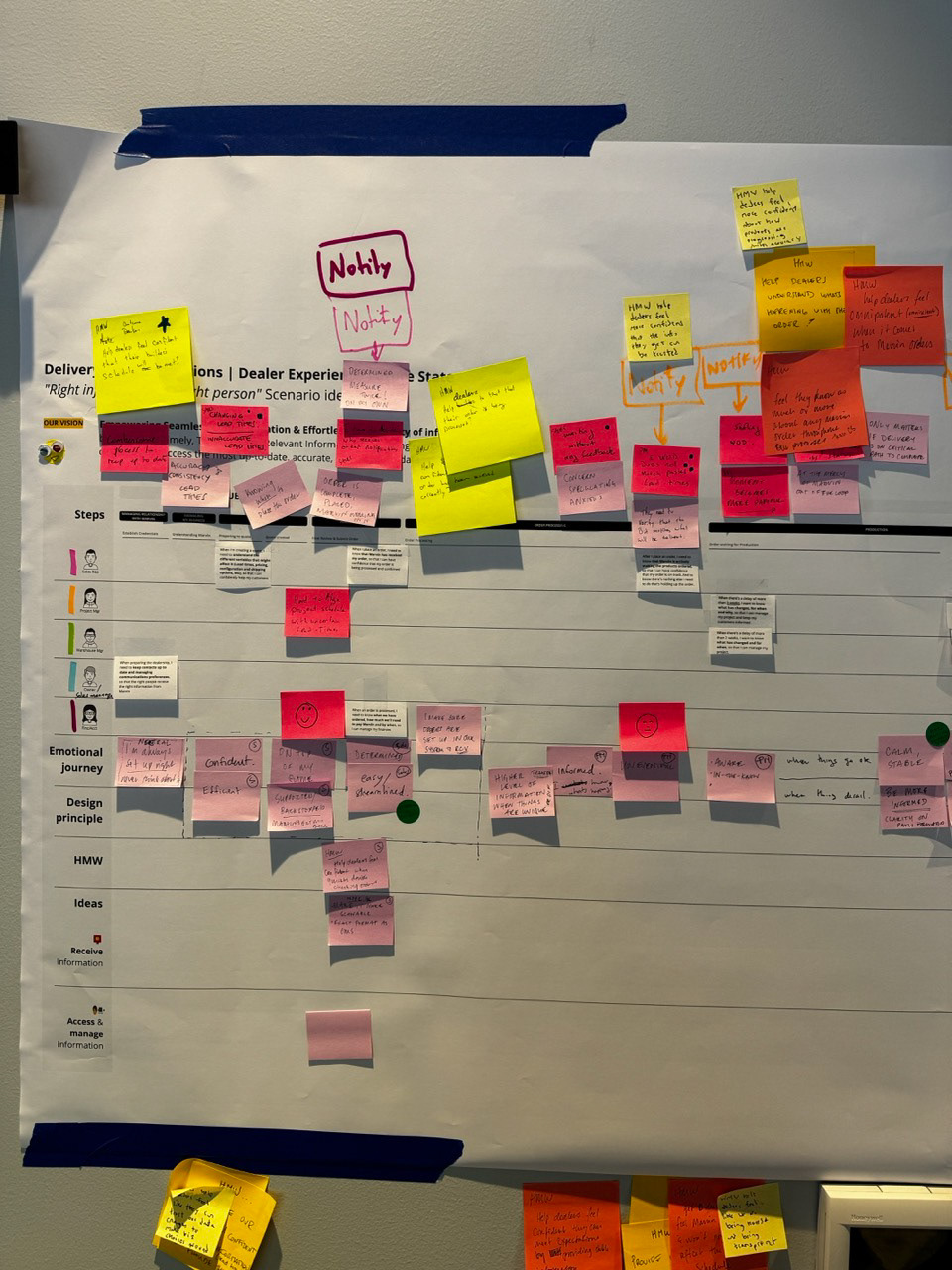
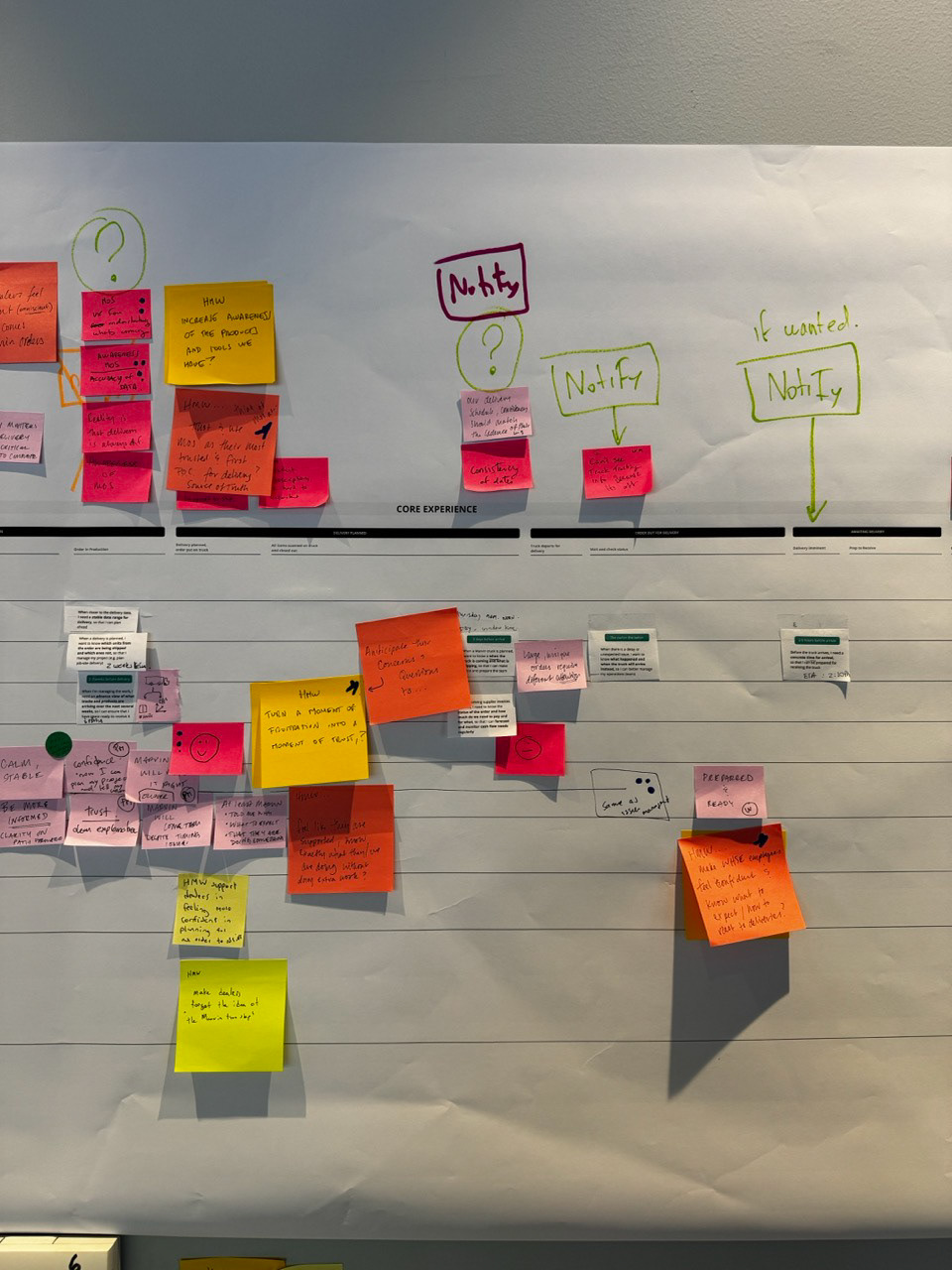
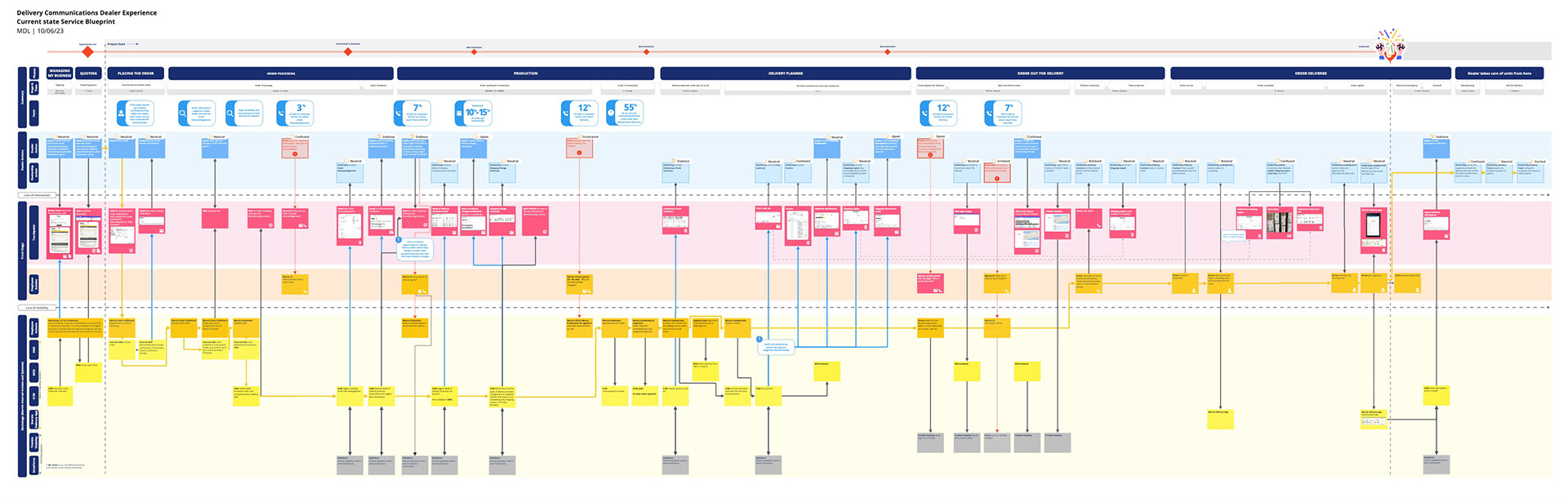
Delivery Communication Experience, Current State Service Blueprint
Key Insights
Across research, three themes consistently emerged.
Dealers experienced Marvin’s delivery communications as fragmented and overwhelming, with too many messages that lacked clarity or relevance. Instead of being helpful, communication often created more questions.
Accuracy and completeness were constant concerns. Inaccurate ETAs or vague updates undermined confidence, making it difficult for dealers to plan projects or communicate realistically with their own customers.
Ultimately, trust was the core issue. Dealers didn’t just want more information—they wanted to feel confident that Marvin’s delivery commitments could be depended on, even when things went wrong.
At a deeper level, we learned that dealers wanted to save time, reduce errors, and protect their margins. A reliable delivery experience would allow them to stop worrying about Marvin logistics and start depending on quoted delivery timelines—even in the face of delays or partial shipments.
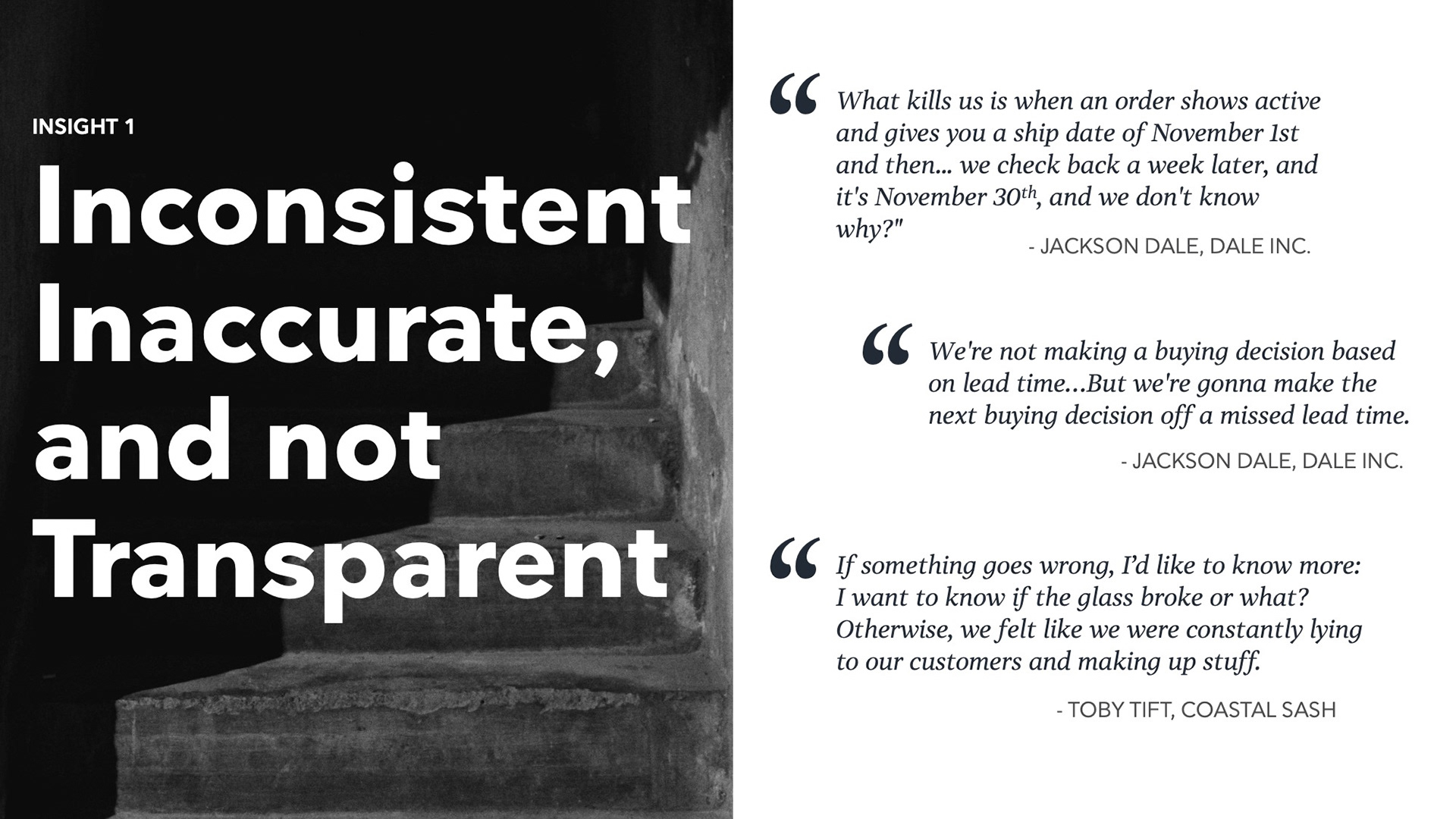
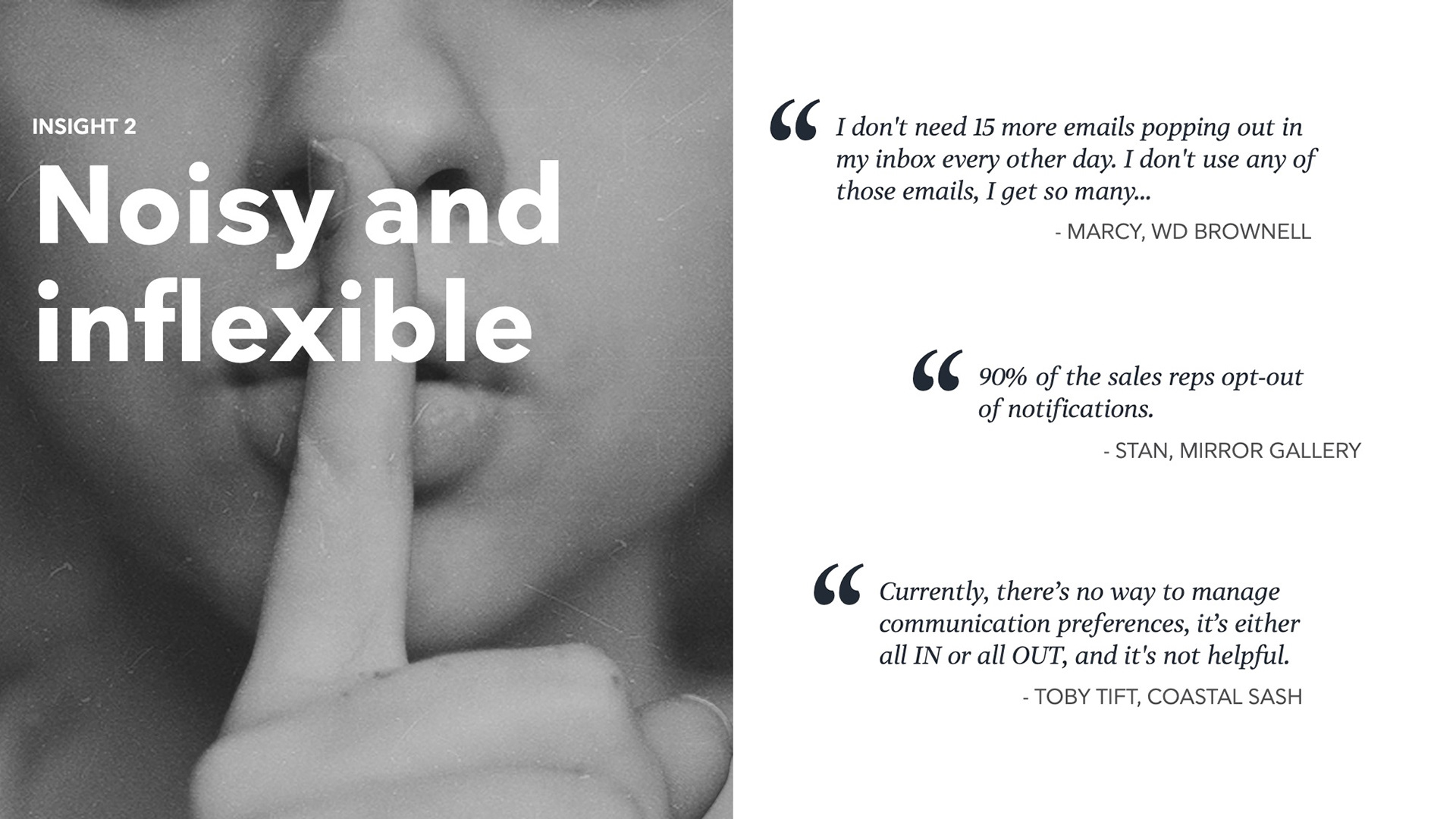
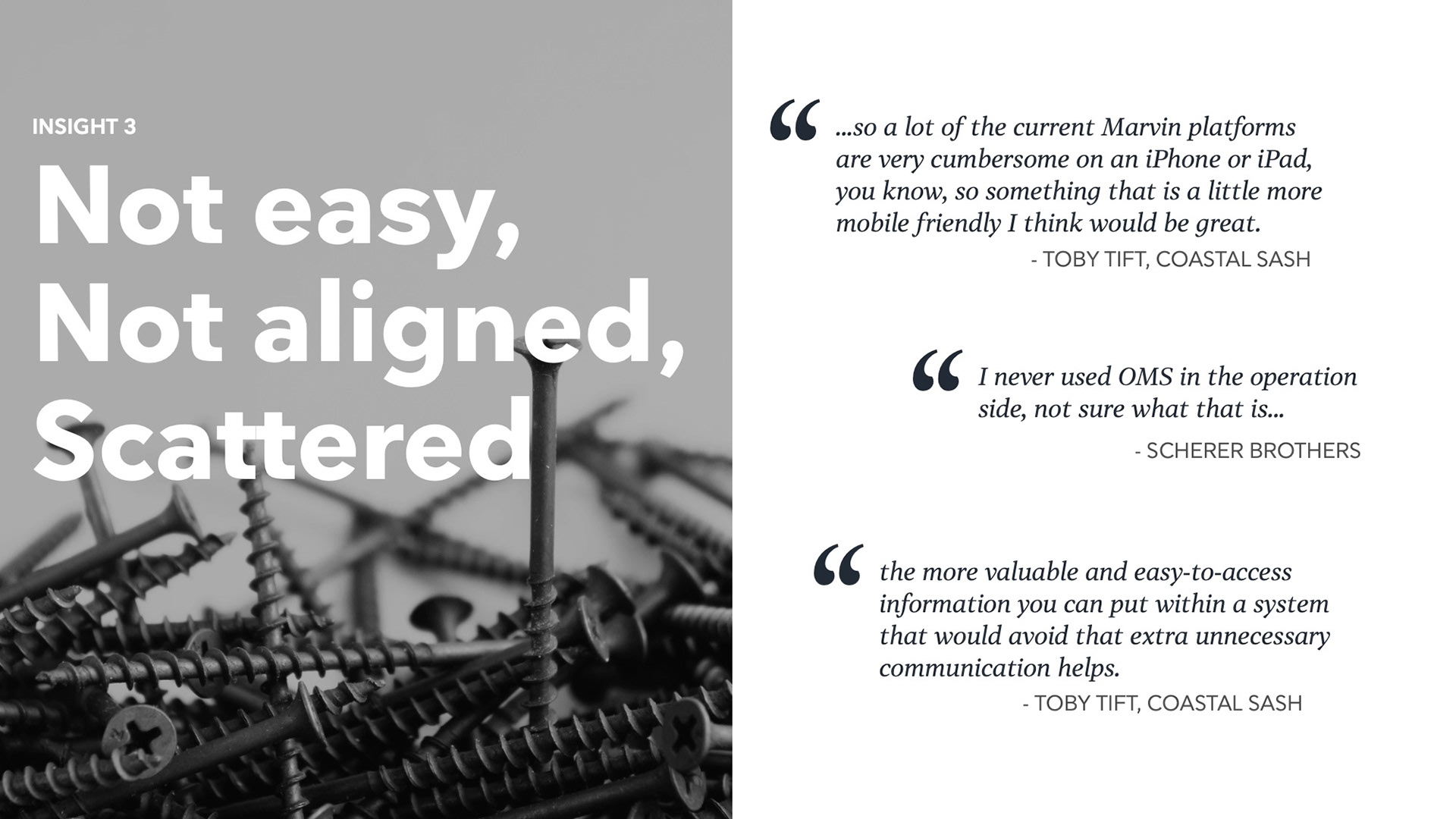
Dealer Interviews Reel
Vision
We defined a clear future vision for Marvin’s Delivery Communication Experience.
In the future, delivery communications would renew trust and confidence with dealer partners by consistently providing accurate delivery estimates, transparency into process and progress, and easy access to relevant information. The experience would feel streamlined, predictable, and reliable.
We defined success as the moment when dealers stop padding lead times, stop calling for reassurance, and confidently plan their work around Marvin’s delivery commitments.
In the future, delivery communications would renew trust and confidence with dealer partners by consistently providing accurate delivery estimates, transparency into process and progress, and easy access to relevant information. The experience would feel streamlined, predictable, and reliable.
We defined success as the moment when dealers stop padding lead times, stop calling for reassurance, and confidently plan their work around Marvin’s delivery commitments.
Strategic Pillars
To guide ideation and validation, we anchored all concepts around three foundational pillars.
✺ The first pillar was accuracy and transparency. In the future state, ETAs and status updates would reinforce reliability by being both trustworthy and contextual—fit for real planning and customer management.
✺ The second pillar was streamlined communication. Notifications would appear only at meaningful moments, delivering insight rather than noise, and clearly indicating the best next step when follow‑up was needed.
✺ The third pillar was one source of truth. Dealers would be empowered to track orders autonomously through a dealer portal or ERP integration, using consistent, reliable data rather than piecing together information from multiple channels.
These pillars also helped us distinguish which challenges dealers could adapt to on their own, which would improve through education, and which required direct support from Marvin to resolve.
Concepts and Validation
We created future state storyboards and concepts to illustrate how the delivery experience could evolve under the new vision. These concepts were used as discussion tools with dealers to validate desirability and to pressure‑test assumptions.
This work helped the organization see that not all improvements required large‑scale redesigns. Some opportunities could be addressed through clearer expectations, better metrics, and more transparent communication—while others required platform‑level investment.
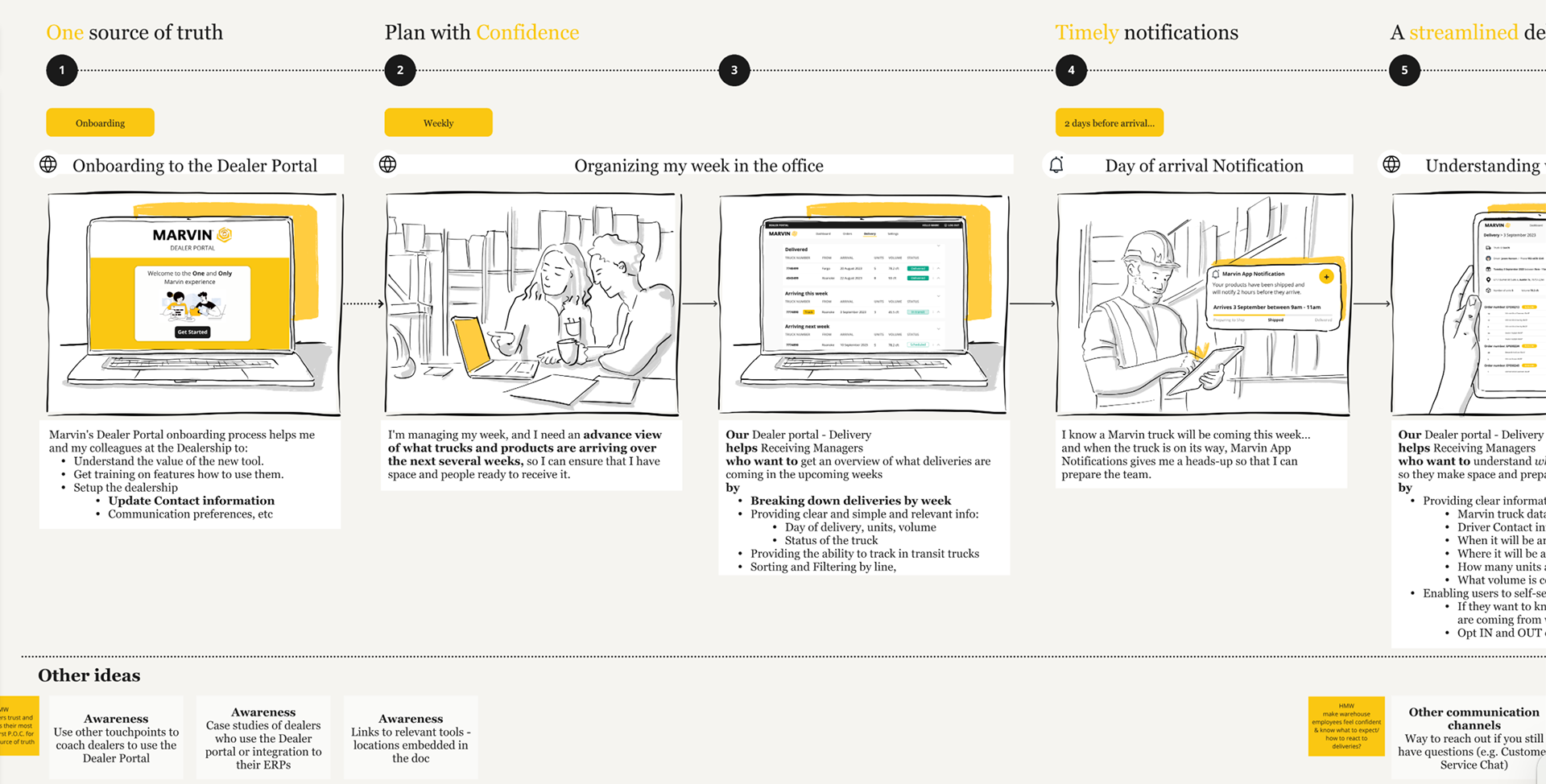
Experience Storyboard, and Sacrificial Concept
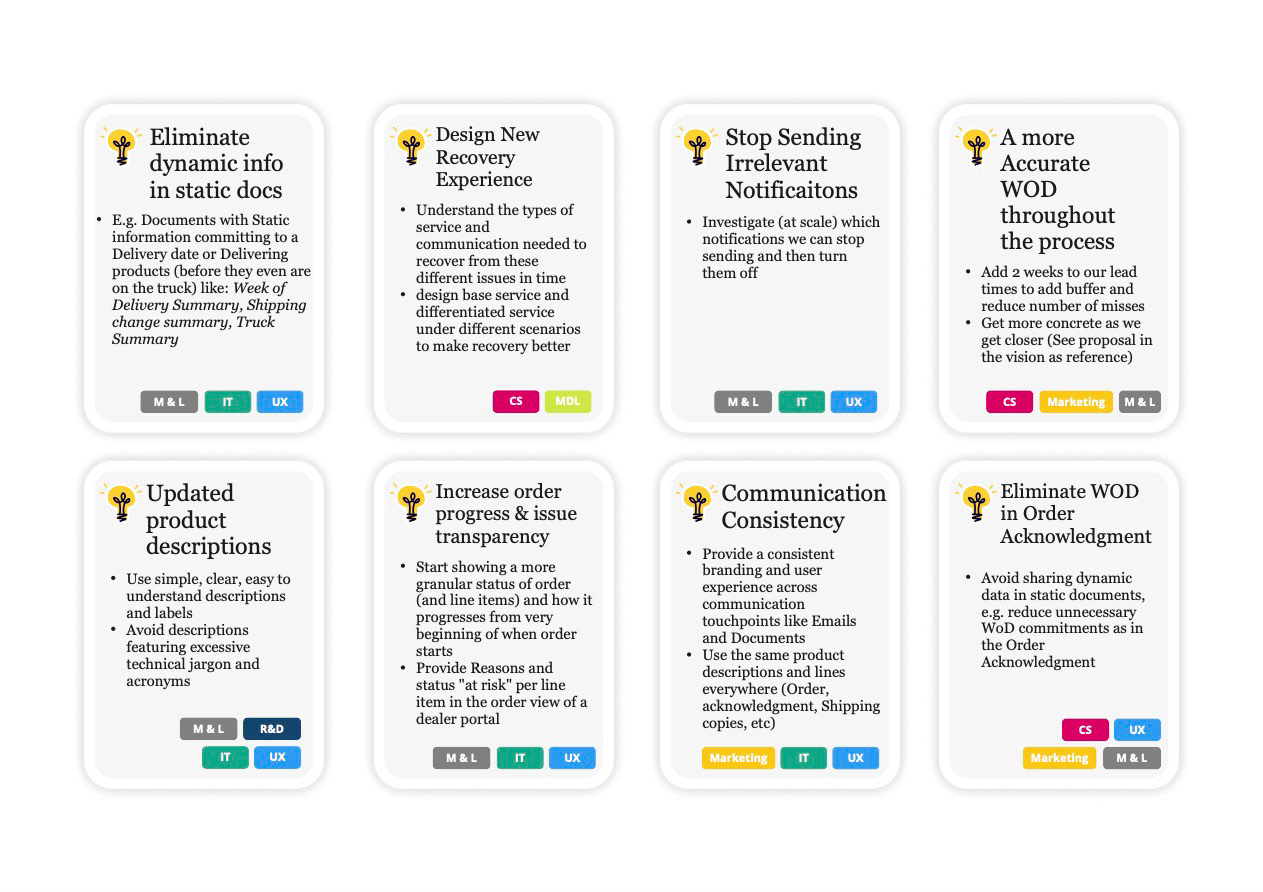
Example of short-term ideas
Outcomes & Deliverables
The project concluded with a facilitated workshop with senior business leaders, where we presented short‑term recommendations and longer‑term strategic direction.
We handed off user‑facing requirements, principles, and metrics intended to inform enterprise blueprints across systems being modernized under the Enterprise Platform Transformation. Rather than prioritizing a MOS front‑end redesign, we aligned on exploring whether future EPT capabilities could provide out‑of‑the‑box portal solutions that better support dealers.
The work also influenced broader conversations around metrics, transparency, and expectation management. Leaders agreed on the need to better measure how current communications are used before removing them, to clarify Marvin’s philosophy around communicating delays, and to rethink how lead times are quoted and managed across production and delivery.
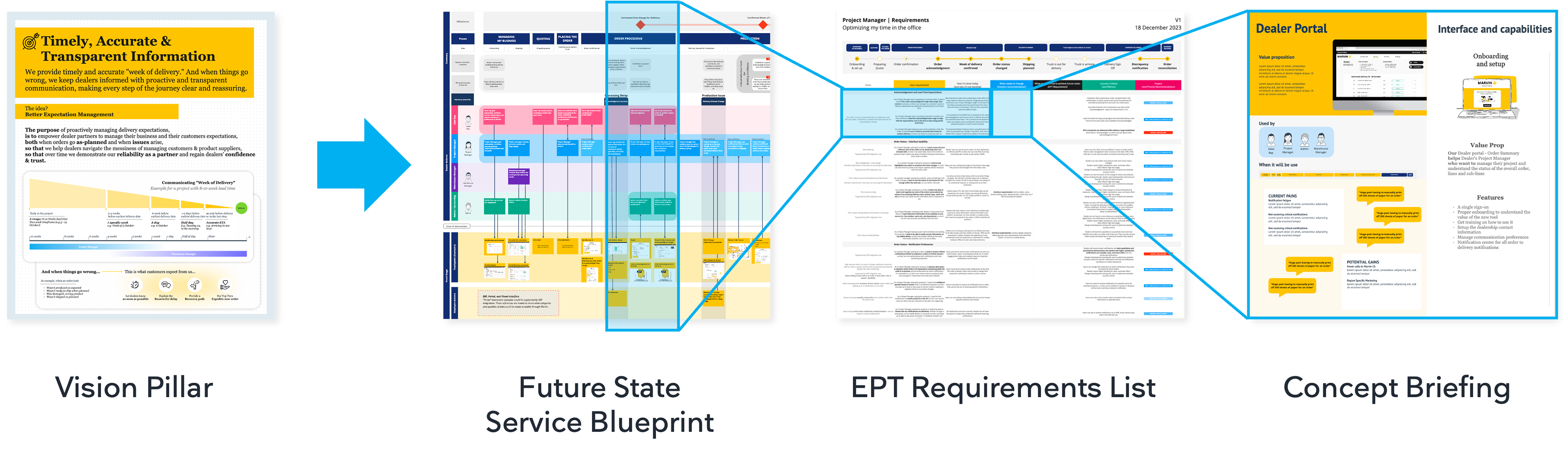
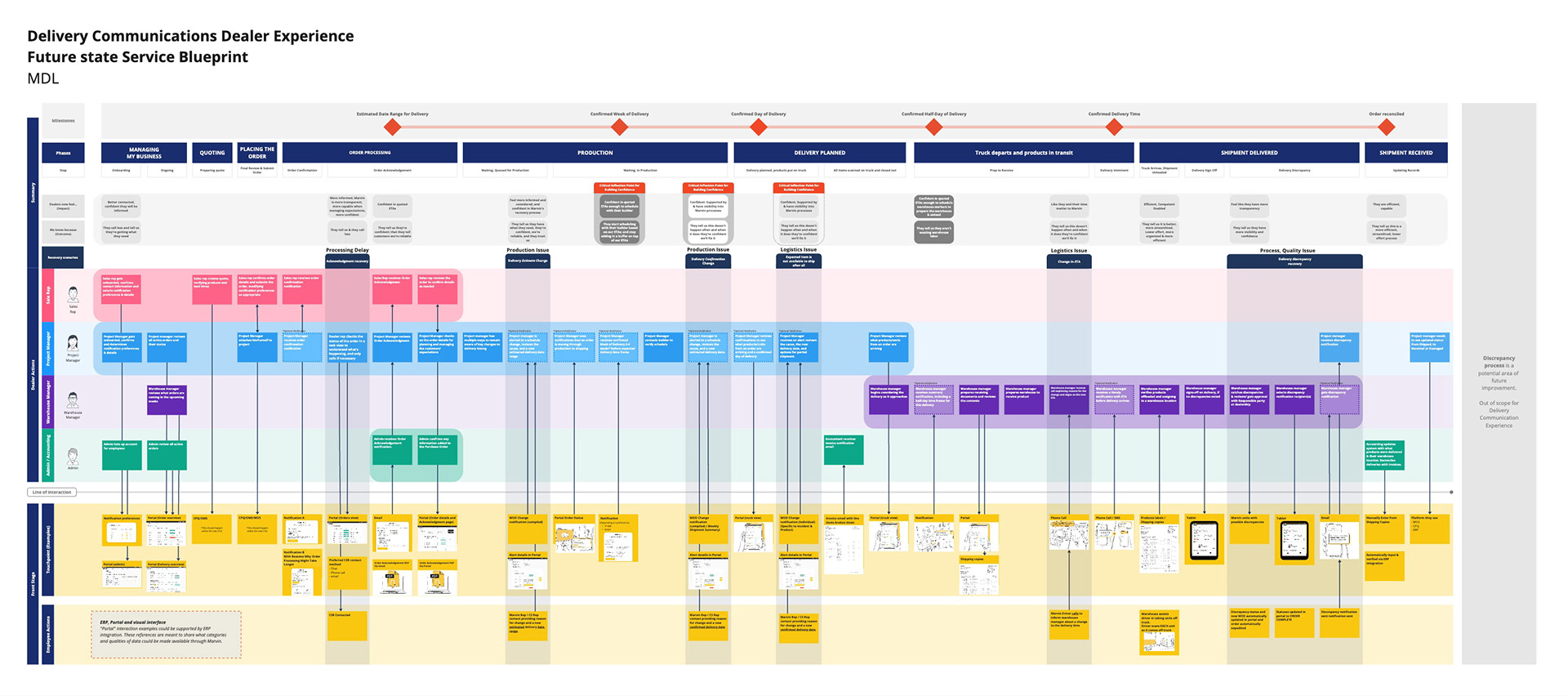
Delivery Communication Experience, Future State Service Blueprint
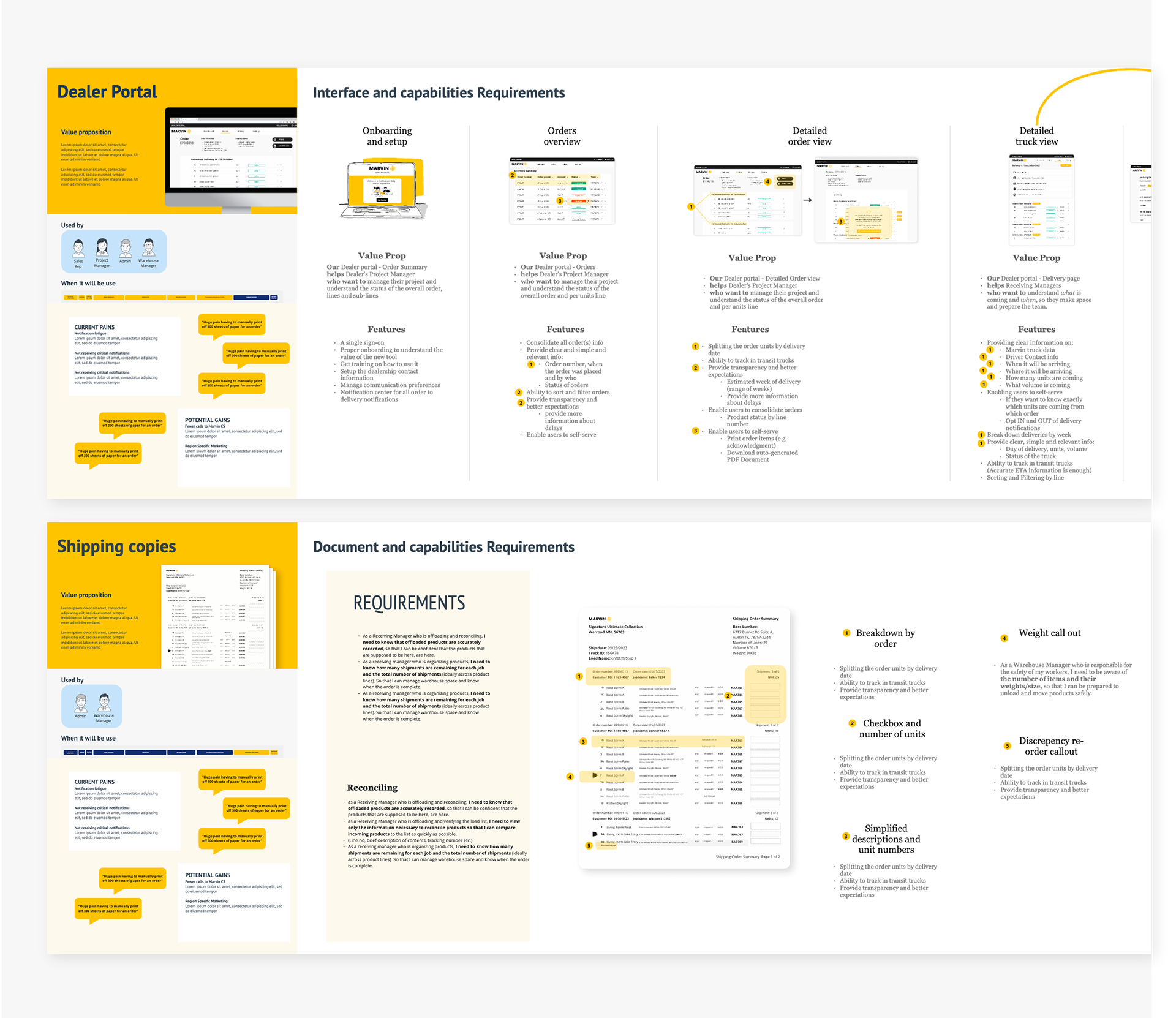
Design Briefs
Reflection
This project reinforced the power of service design to influence not only customer experiences but also organizational structure and strategic decision‑making. While we set out to understand why dealers struggled with delivery communication, we uncovered a deeper systemic issue: no one owned the customer‑facing digital experience end‑to‑end. Delivery wasn’t failing because of one broken tool—it was failing because accountability was fragmented across functions, systems, and teams.
This insight became one of the most meaningful outcomes of the project. It helped the CDO build a business case for establishing a dedicated Digital Product organization, accountable for designing and managing customer‑facing digital experiences holistically. A year later, our CX team became part of this organization, with clearer ownership, decision-making structure, and alignment. Today, I lead the UX team and sit on the digital leadership team, shaping the strategy across multiple customer-facing touchpoints.
The experience also taught me important lessons about cross‑functional strategy. Even when the problem is well understood, timing and priorities rarely align across the organization. Without strong sponsorship from senior leadership, it is difficult to activate enterprise-wide change. Many stakeholders believed the long-term Enterprise Platform Transformation—expected to take five to seven years—would eventually solve these issues. What surprised me most was the limited appetite for phased, incremental improvements that could alleviate customer pain in the meantime.
This shaped how I approach service design going forward. It reminded me that while mapping a complex ecosystem is essential, trying to address the entire journey at once can dilute impact. If I were to do it again, I would focus more intentionally on a smaller number of high‑leverage touchpoints—creating momentum through iterative, feasible improvements that build toward long-term change.
Ultimately, this project demonstrated that service design is as much about uncovering organizational blind spots as it is about improving customer journeys. By grounding decisions in dealer behavior and internal realities, we helped the organization recognize delivery not as a logistical afterthought but as a trust-building experience that directly impacts dealer efficiency, confidence, and loyalty.